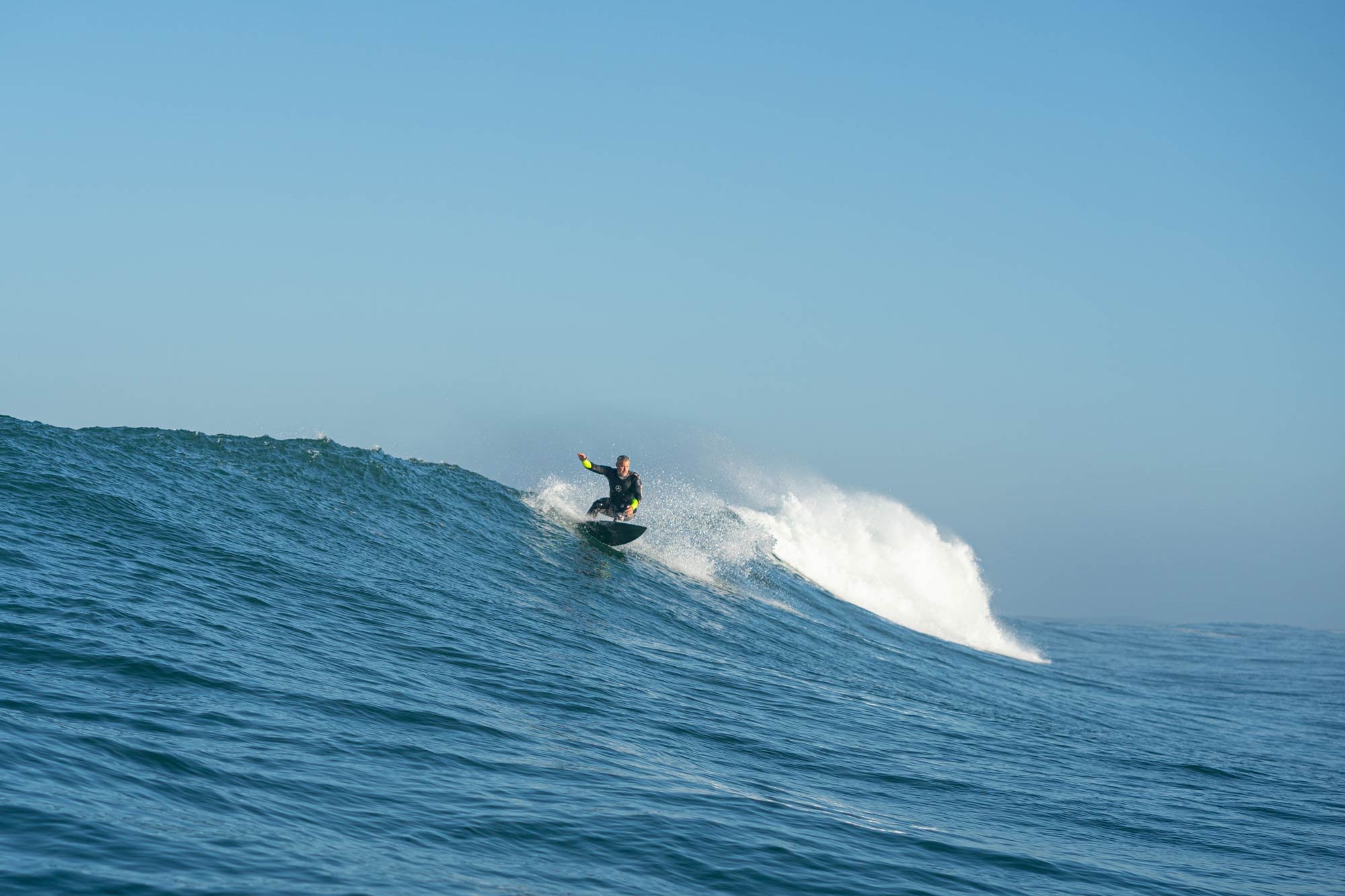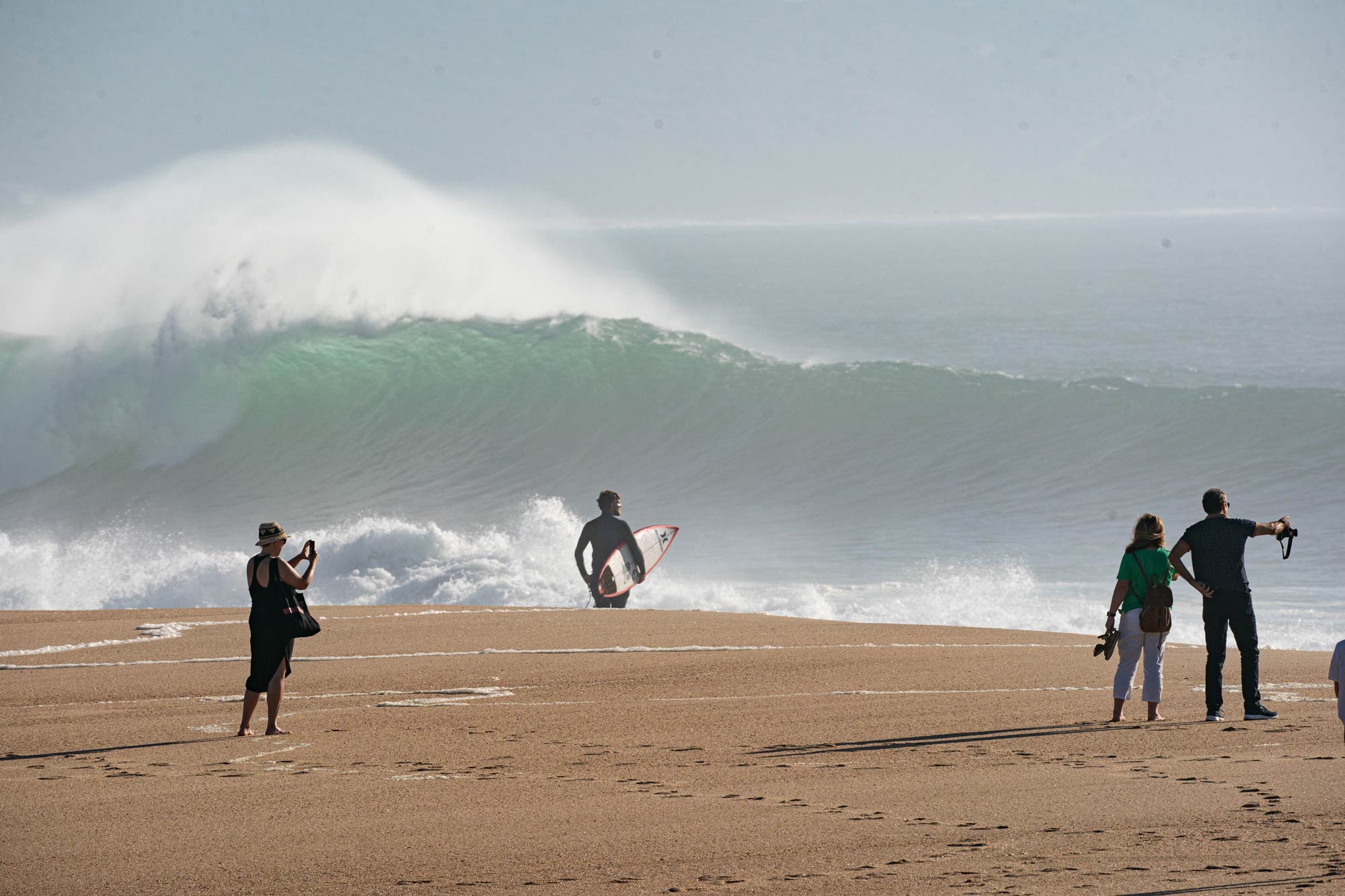
Nazaré, Portugal, has become one of the most recognizable places in the world of big-wave surfing. Every winter, powerful Atlantic swells roll toward its coastline, creating waves that can reach extraordinary heights and attracting some of the world’s best big-wave surfers.
But what makes this stretch of coastline so different?
The answer isn’t entirely visible from the beach. Far beneath the surface of the Atlantic Ocean is an enormous geological formation known as the Nazaré Submarine Canyon. It is one of the largest underwater canyons in Europe, stretching roughly 200 kilometers offshore and reaching depths of more than 5,000 meters.
I wanted to take a closer look at what is happening beneath the water and explore how this remarkable underwater landscape interacts with the powerful ocean swells that make Nazaré famous.
A Giant Canyon Hidden Beneath the Atlantic
The Nazaré Canyon is an underwater valley carved into the continental margin off the western coast of Portugal. Its head approaches the coastline near Praia do Norte, placing a massive underwater geological feature remarkably close to shore.
From above the water, there is no obvious indication of what lies below. The coastline looks relatively ordinary, but the seafloor tells a completely different story.
The canyon has steep walls, deep channels, and dramatic changes in underwater elevation. In some areas, the seafloor drops thousands of meters. Its shape creates a complex underwater environment that influences how ocean waves travel as they approach the coast.
How the Canyon Influences the Waves
The canyon plays an important role in the wave dynamics around Nazaré.
As ocean swells travel toward land, they interact with changes in water depth. These changes affect wave speed and direction, a process known as refraction.
The unusual shape of the Nazaré Canyon creates a particularly complicated interaction. Swell traveling over the deeper canyon and swell traveling across the shallower continental shelf can behave differently as they approach the coastline.
Research into the canyon has shown that reflection and refraction along the canyon’s edges can help focus wave energy toward Praia do Norte. The exact shape of the canyon near the coast is especially important.
It is not simply a matter of waves being funneled through an underwater channel. The interaction is much more complex, involving the canyon’s geometry, the direction of the incoming swell, and the way different parts of the wave field come together.

It Starts With Storms in the North Atlantic
The giant waves at Nazaré begin far from Portugal.
Powerful low-pressure systems moving across the North Atlantic generate strong winds over large stretches of open ocean. When those winds blow consistently over a long distance, they transfer energy into the water, creating powerful swells.
These swells can travel hundreds or even thousands of kilometers before reaching the Portuguese coast.
By the time they arrive at Nazaré, the original storm may be far away. What remains is the energy traveling across the ocean in the form of long-period swell.
When the direction, period, and size of that swell align with the underwater geography, the conditions can become extraordinary.
Visualizing What Happens Beneath the Surface
One of the most interesting parts of exploring Nazaré is realizing how much of the story is hidden underwater.
For this project, I used bathymetric imagery and AI-assisted scientific visualizations to bring the underwater landscape to life. The goal was to make the canyon easier to understand, showing its relationship to the coastline and illustrating how incoming North Atlantic swell interacts with the seafloor.
I also created a visualization of a powerful North Atlantic storm system, showing how the storm’s wind field and long-distance swell travel toward Portugal.
These are explanatory visualizations rather than live weather data or a real-time ocean forecast. They are intended to help illustrate the larger processes behind Nazaré’s incredible waves.
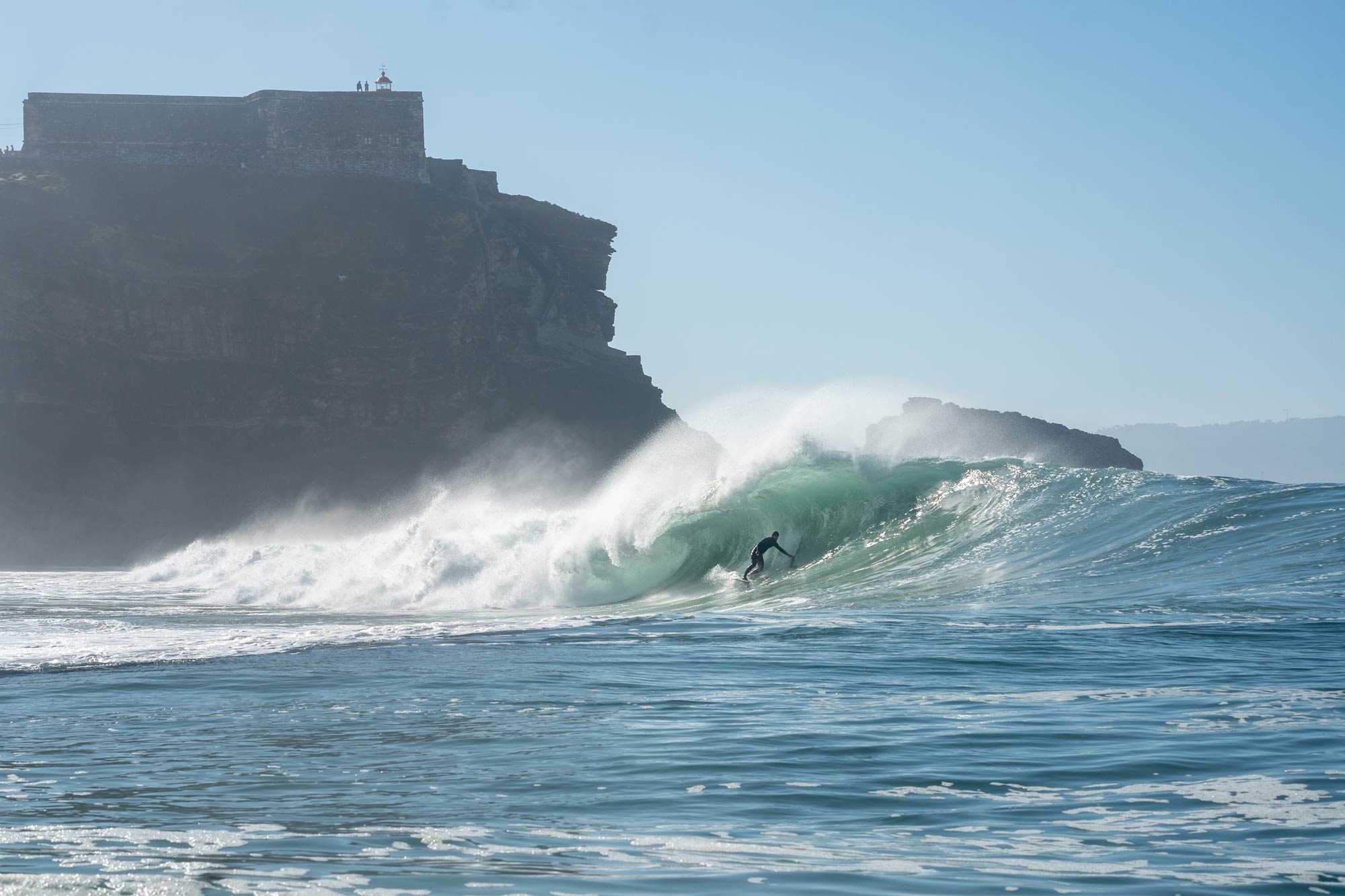
Watch the Documentary
The best way to understand the scale of this underwater formation is to see it.
In this video, we travel beneath the surface to explore the Nazaré Submarine Canyon, look at the North Atlantic storm systems that generate powerful ocean swells, and visualize how the underwater landscape helps shape the waves that eventually reach the coast.
The Ocean Has a Story Beneath the Surface
Nazaré is famous for what happens above the water, but its story begins thousands of meters below it.
The combination of powerful North Atlantic storms, long-period ocean swell, and an extraordinary underwater landscape makes this coastline a fascinating place to study. The canyon is a major part of that story, and scientists continue to investigate exactly how its shape influences the waves.
The next time you see a giant wave breaking at Nazaré, remember that what you’re watching is only the final part of a much bigger process.
The real story begins far offshore, and deep beneath the surface.

GEAR
Gear: Sony a1i – https://amzn.to/49tJ0ts
Sony 200-600 – https://amzn.to/3MNbLeQ
iFootage Tripod – https://amzn.to/4uf8cP5
Manfrotto 504x – https://amzn.to/4aXfi3j
Link To ALL Gear – https://www.amazon.com/shop/jaybelsky