I remember the exact moment it started.
I was home at my desk facing the window, just going about the night like any other, when the sky suddenly lit up. Not a flicker, not passing headlights, something stronger. It was the kind of light that makes you stop mid-thought because it doesn’t make sense.
I looked out, and for a split second I just stood there trying to process it. Then the glow grew. Brighter. Wider. Alive.
That was all I needed.
I grabbed my Sony a9 off the table, slung my 24–70mm and 85mm with me, and headed straight out the door.
I didn’t hesitate. I didn’t overthink it. I just moved.
Running Toward It
By the time I got outside, I could already feel it in the air. Something was off. The closer I got, the heavier it felt, like the night itself had thickened. Then I started to hear it, a deep, aggressive roar that didn’t belong anywhere near a residential street.
I turned the corner, and that’s when it hit me.
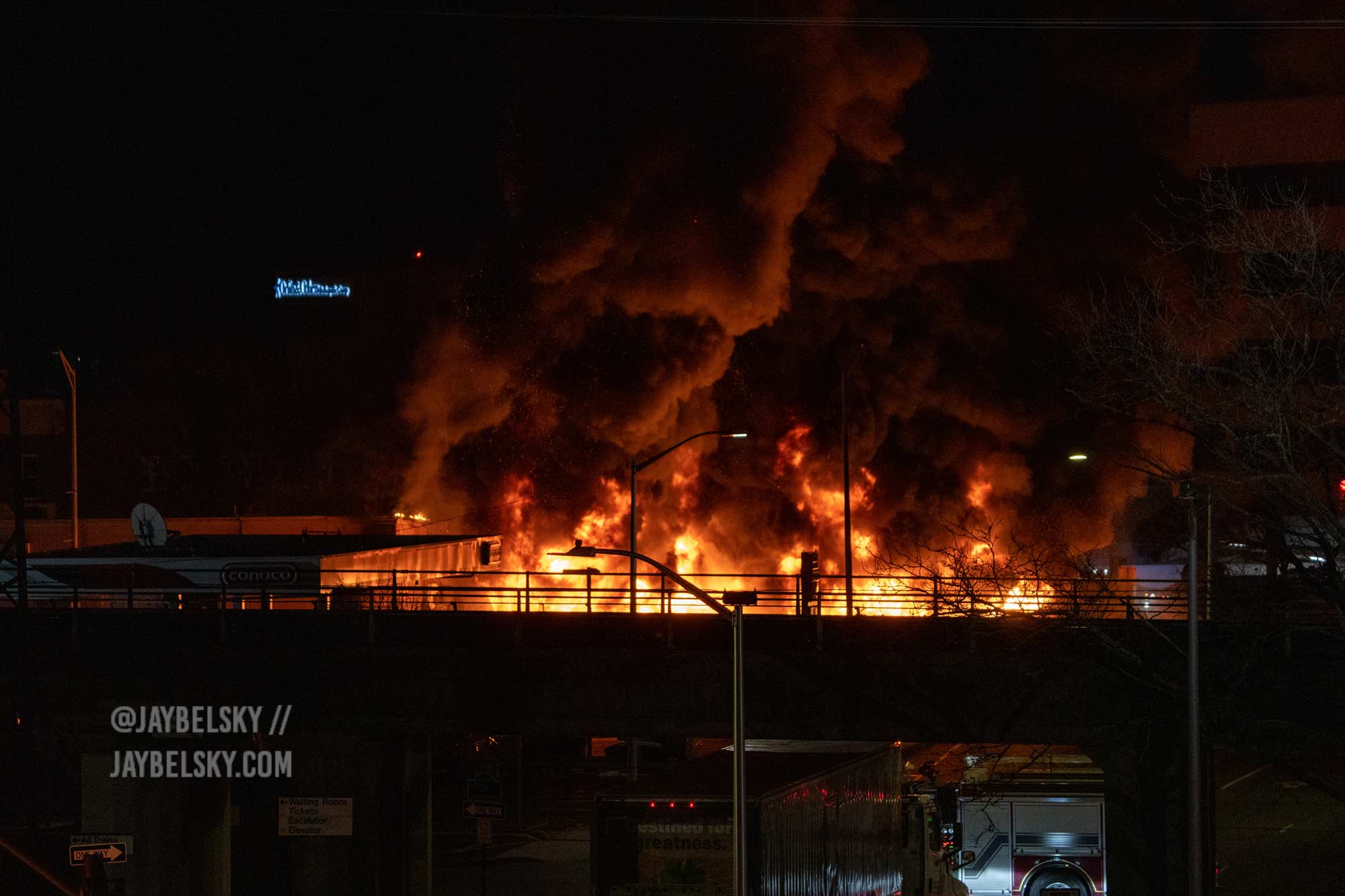
The entire scene was already engulfed. At first i thought a car smashed into the gas station.
But it was a tanker truck had crashed, and the fire was fully alive, pushing up into the sky, rolling, snapping, constantly shifting. The heat reached me almost instantly, pressing against me before I even raised the camera.
And then I noticed the ground.
At first I thought I was seeing things, but I wasn’t.
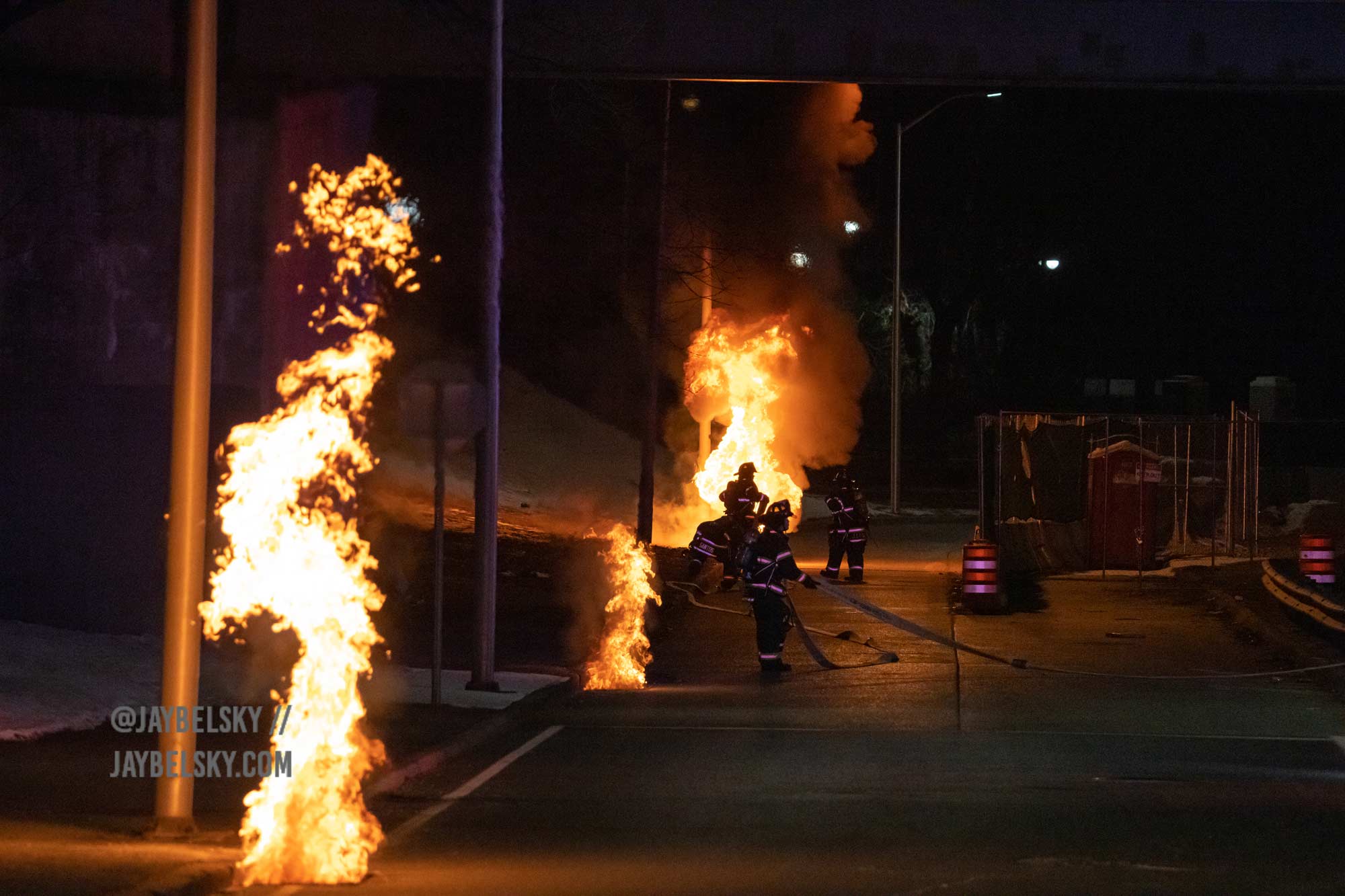
Fire was coming out of the street.
Manholes were erupting, flames shooting up in bursts, spreading beyond the crash site itself. It didn’t feel contained. It felt like the entire block had become part of the fire. Like it could pop up anywhere, at any time.
I remember thinking, this isn’t normal. This is something else.
But I was already there.
I brought the camera up and started shooting.
Shooting the Chaos
At first, I stayed wide with the 24–70mm, trying to capture what I was looking at, the scale of it, the height of the flames, the way the light spilled across everything. The scene didn’t sit still for a second. It kept changing, shifting, growing.
I kept adjusting without even thinking. Years of shooting just took over.
Then I switched to the 85mm.
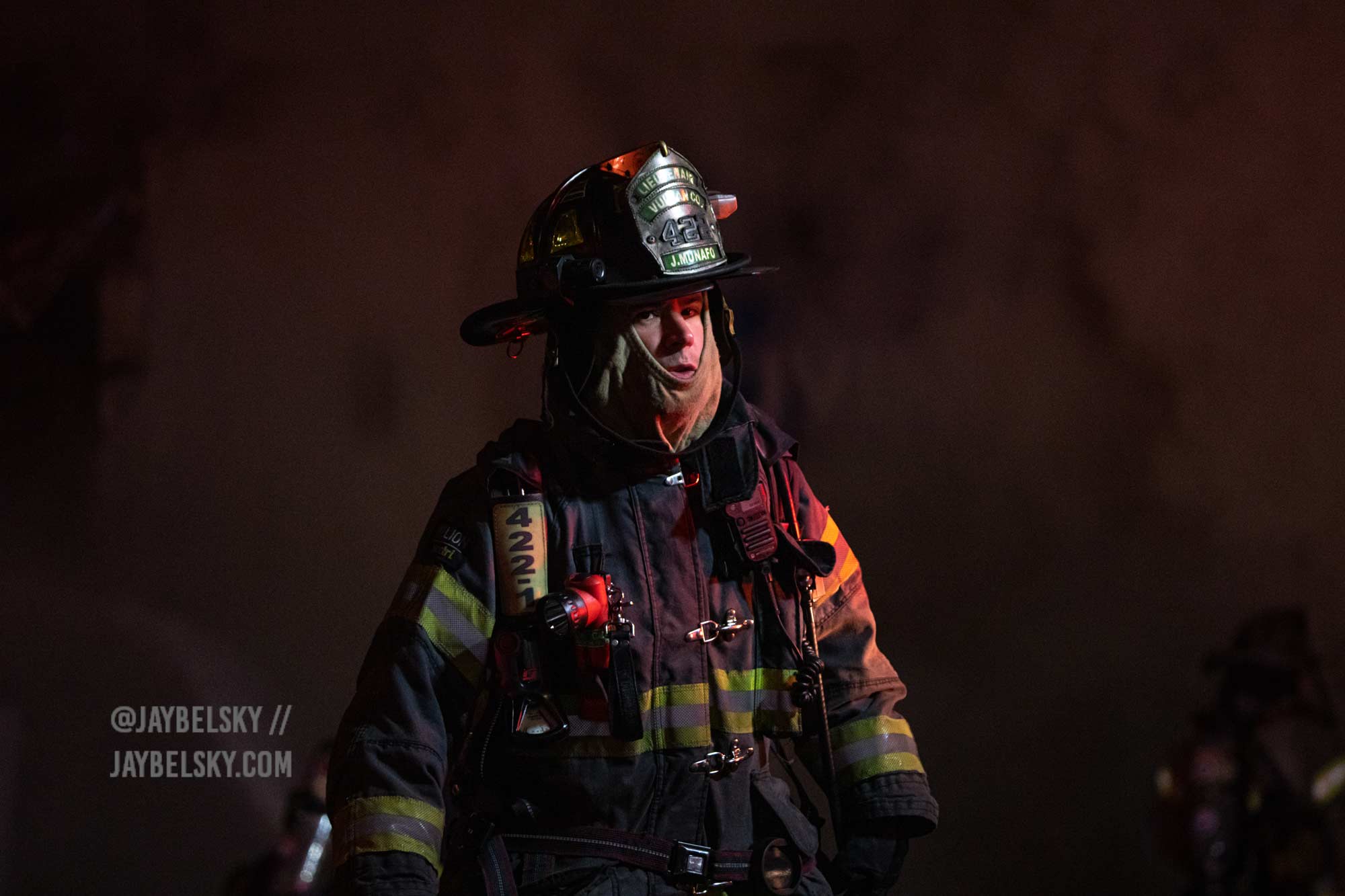
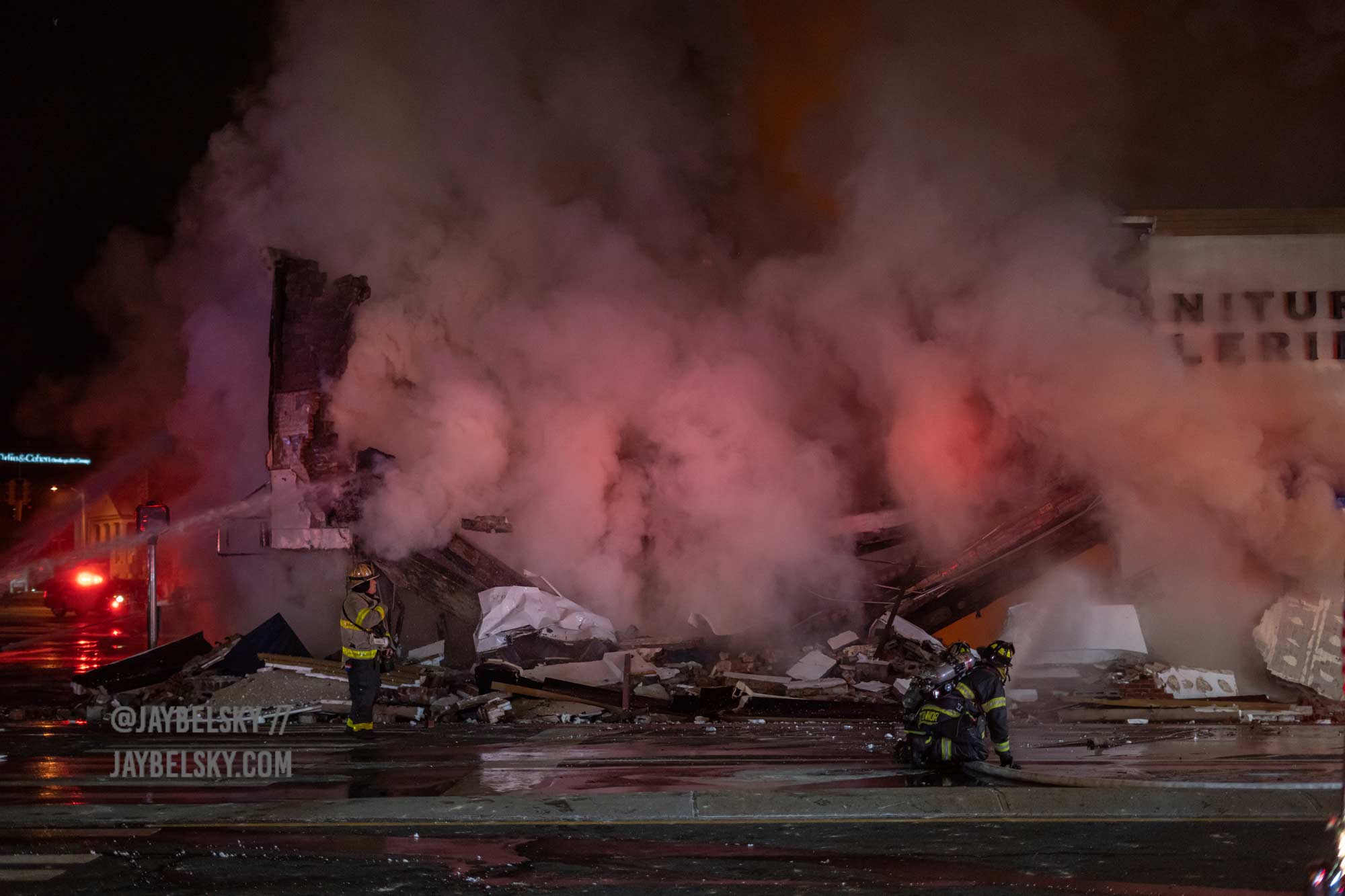
That’s when everything tightened. I started picking out moments inside the chaos, firefighters moving through smoke, the texture of the flames as they rolled and curled, the kind of details you don’t notice until you isolate them.
Everything around me was loud, fast, unpredictable.
But behind the camera, it felt focused.
Controlled.
Behind the Lines
By then, first responders were fully arriving and locking the scene down. Police lines went up quickly, and fire crews moved in with purpose. The energy shifted from chaos to controlled urgency in a matter of minutes.
Because I’m a credentialed member of the press, I was able to move where others couldn’t, positioning myself behind the lines, closer to where everything was actually happening.
That access is something I don’t take lightly.
Standing there, I was fully aware of what kind of environment I was in. This wasn’t just a fire you watch from a distance. This was a working fire, fueled by gasoline, spreading in ways you couldn’t always predict.
I kept my head on a swivel the entire time.
Watching how the fire moved.
Watching the crews.
Watching for anything that didn’t feel right.
Because it only takes one second for things to change.
And out there that night, you could feel that.
When the Cameras Turned Around
At some point, while I was focused on shooting, I became aware of something else.
People were looking at me.
Cameras were turning in my direction.
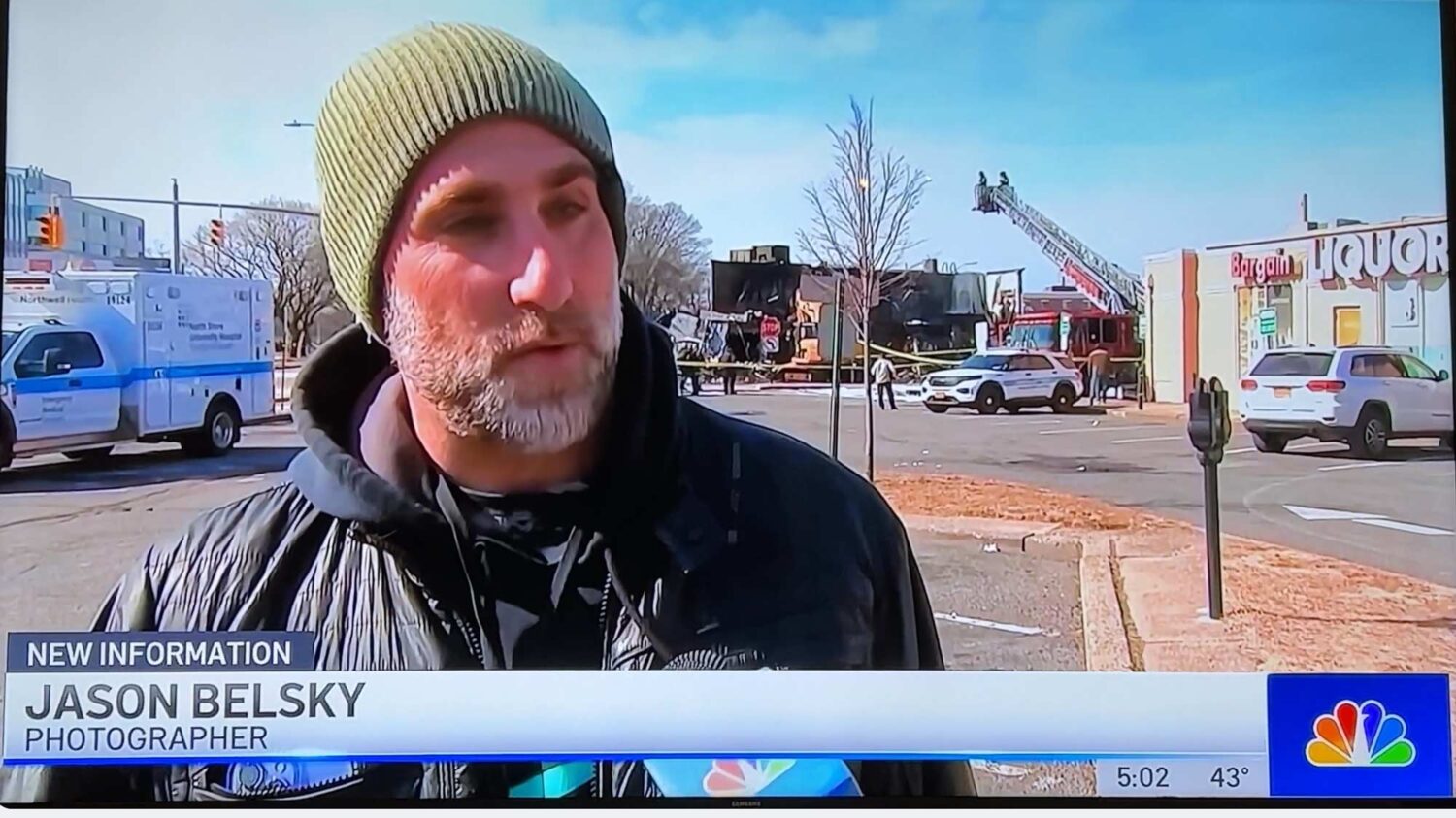
Next thing I knew, I was being asked questions. I ended up doing interviews with a few different news outlets right there on scene, including Pei-Sze Cheng from NBC New York.
It was a strange shift.
One minute I’m documenting everything unfolding in front of me, the next I’m trying to explain what I just witnessed while it’s still happening around me.
I was still holding my camera, still glancing back at the fire between questions, still processing it all in real time.
I wasn’t thinking about it in that moment, but looking back, it hit me.
I wasn’t just watching it.
I was part of the story now.
After It Settled
When everything finally started to settle and I had a moment to breathe, I thought about how fast it all happened.
One minute I was inside my house, looking out a window.
Minutes later, I was standing a block away from one of the most intense scenes I’ve ever witnessed, documenting fire coming from the sky and the ground at the same time.
There was no planning for it.
No setup.
No second chance.
Just instinct, experience, and being ready when it mattered.
That’s what this kind of work really is.
You don’t wait for the story.
Sometimes, it shows up outside your window.
And when it does, you grab your camera and you run toward it.
Gear Used
Sony a9i
Sony 24-70GM
Sony 85